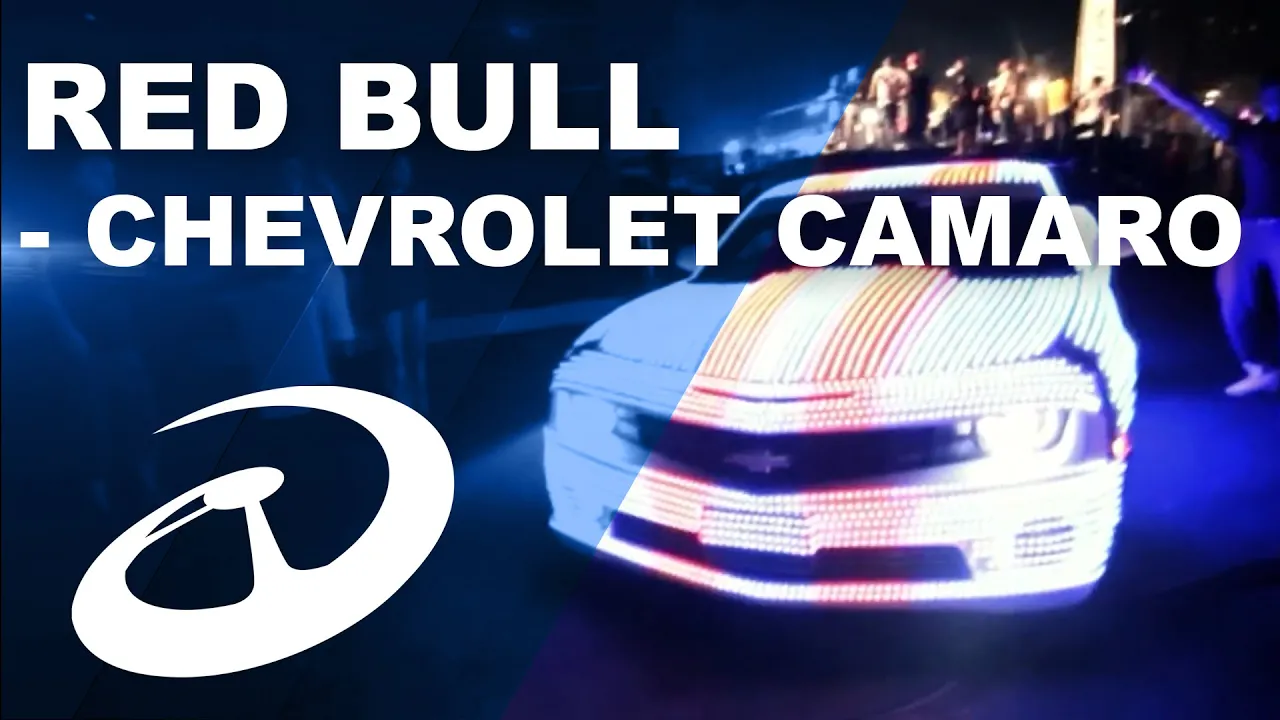
Project Quick Facts
The Brief: Just Mildly Surprise Some Shoppers #
Red Bull was launching new versions of their drinks and wanted something fun in one of the biggest shopping malls in Bratislava. The original idea was simple: send in a few dancers, do a quick flash mob, surprise people a little, and leave. Nothing too elaborate.
That plan lasted until we walked into the mall.
What We Saw When We Got There #
When we did the venue survey, it was immediately obvious that the space had much more potential than a basic flash mob. The layout, the upper floor, the sightlines — it was all there. We made a decision on the spot: we were not going to just “run in and dance”. We were going to build a full stage — and we were going to do it in seconds.
The day before the performance, we ran a rehearsal on exactly that. How fast can you actually set up a proper performance space in a busy shopping mall? The answer turned out to be about five seconds.
Here is what that five-second stage consisted of:
- A roll of ballet vinyl flooring unrolled across the mall floor. Ballet floor has a smooth, slightly reflective surface that catches and bounces light beautifully — the LED dance suits look ten times better on it than on bare tiles.
- A section of black theatre fabric fixed to the upper floor railing behind the dancers. This is a simple but important trick. In a shopping mall, everything in the background is busy — shop signs, glass, people. A flat black backdrop makes the dancers and their LED costumes the only thing the eye sees.
- A proper speaker setup, because a performance that looks stunning but sounds like it is coming from a phone speaker is only half a performance.
Five seconds. Stage done.
The LED Suits #
The LED dance suits used in this performance were our first generation. Each suit was covered in addressable RGB LED strips — individually controlled pixels wrapped around every part of the costume. Arms, torso, legs: all independently programmable.
Control ran through LED Strip Studio software — the same software we use for TV studio installations and permanent venue setups. For dance performances, we added a dedicated feature: a music timeline editor. This lets you map out exactly which dancer lights up, which part of their body, and in what colour — frame by frame, synced to the track. The music for this performance was composed specifically for the show by Robert Burian.
The first-generation suits worked for the Red Bull performance. They were not perfect — the wiring and construction had issues that became obvious after a few hours of use — and they were retired immediately after. But they proved that the concept worked.
Since then, we have built five further versions of the LED dance suit, each one better than the last. Those suits have been used in hundreds of performances across multiple countries.
The Reaction #
When the dancers appeared in the mall and the music started, shoppers stopped. Not a polite pause — a full stop. People stood and watched. The combination of the performance space appearing from nowhere, the music filling the atrium, and the LED pixel costumes lighting up in full synchronised animation was not something anyone was expecting in the middle of their Saturday shopping.
The video from the performance was posted online and reached over one million views in under a month. Among the people who shared it was Paris Hilton, who posted it to her own social media profile.
The response directly led to the next chapter: Tron Event Agency (troneventagency.com) — a separate company focused entirely on LED dance performances and entertainment. What started as a Red Bull marketing activation turned into a business.
What Made It Work #
Looking back, this performance worked because several independent things came together at the right moment:
- Custom music written specifically for the show, so the LED animation and the track were designed around each other
- LED dance suits that were new enough to be genuinely surprising — most people had never seen a performer in a fully pixel-controlled costume
- A fast stage setup that made the whole thing feel spontaneous even though it was carefully rehearsed
- LED Strip Studio with music timeline control, giving the show choreography that went beyond just “LEDs flashing to the beat”
None of those elements alone would have been enough. Together, they created something that felt like it came out of nowhere — which is exactly what a great flash mob is supposed to do. Maybe that’s why Paris Hilton shared this performance on here profile :) …
Frequently Asked Questions #
How do LED dance suits work?
LED dance suits use addressable RGB LED strips sewn or mounted across the costume. Each pixel on the suit is individually controllable. A small LED pixel controller is carried by the performer or connected via a cable to the control system offstage. The controller receives a signal — typically via a wireless or wired connection — and sets each pixel to the correct colour and brightness for that frame. The result is a costume that can display animations, react to music, and change appearance completely in real time.
How do you sync LED costumes to music?
The most precise method is a music timeline editor built into the control software. In LED Strip Studio, you import the track and then place colour and effect cues on a timeline, frame by frame. Each cue can target a specific performer, a specific body segment, or all suits simultaneously. When the show runs, the software plays the timeline in sync with the music, triggering each LED cue at exactly the right moment. This is different from audio-reactive LED control — timeline mode gives you complete predictability, which matters on a live stage.
What is the best LED controller for wearable LED costumes?
For wearable LED costumes, you need a compact standalone LED controller that can run from a battery and play pre-programmed animations without a computer connected. An SD card LED controller is a common choice — you export your animation from the mapping software to an SD card, insert it into the controller, and it plays autonomously. For performances where the choreography is fixed, this approach is reliable and removes the need for any wireless signal during the show.
How to use a music timeline editor for LED shows?
A music timeline editor lets you place LED cues — colour changes, effects, segment activations — at specific timestamps along an audio track. You work visually, like editing video, but instead of cutting clips you are setting which pixels light up and how. The timeline is exported and played back in sync with the audio during the live performance. LED Strip Studio includes this feature, and it is what made the Red Bull flash mob performance possible — every colour burst in the suit animation was placed by hand against the custom track.
How to build a stage in a shopping mall quickly?
The key is having everything pre-planned and pre-packed so that setup is a physical action, not a decision process. For this performance, the stage consisted of three elements: a roll of ballet vinyl floor (unrolled in one motion), a black theatre backdrop (clipped to the upper railing in seconds), and a portable speaker system. Each element was chosen because it could be deployed in under a minute. The venue survey the day before is what made this possible — we identified exactly where each element would go before the performance day.
How to make LED costumes stand out in a bright indoor space?
The single most effective trick is a black backdrop. In a brightly lit shopping mall, the ambient light competes with the LEDs in the costumes and reduces their visual impact significantly. A flat black fabric behind the performers absorbs all that background detail and makes the LED suits the only light source the eye focuses on. The other factor is floor choice — a reflective surface like ballet vinyl bounces the costume light downward, doubling the visual impact of each pixel. Both techniques were used in the Red Bull Bratislava performance.