


Project Quick Facts
How Pixel LED Strips Turned a Got Talent Stage Into a Live Screen #
When most people think about a TV talent show stage, they imagine big spotlights and maybe some screen panels. But this installation took a completely different approach — using addressable LED pixel strips embedded directly into the floor and ceiling to create a fully live, video-capable stage surface. Here is how it was done and what made it interesting.
The Challenge: Strange Shapes and a Huge Star #
The biggest challenge of this pixel LED installation was the shape of the stage itself. The floor was not a simple rectangle — it had irregular edges that needed to be covered entirely with addressable LED strips, turning it into a live screen you could walk on.
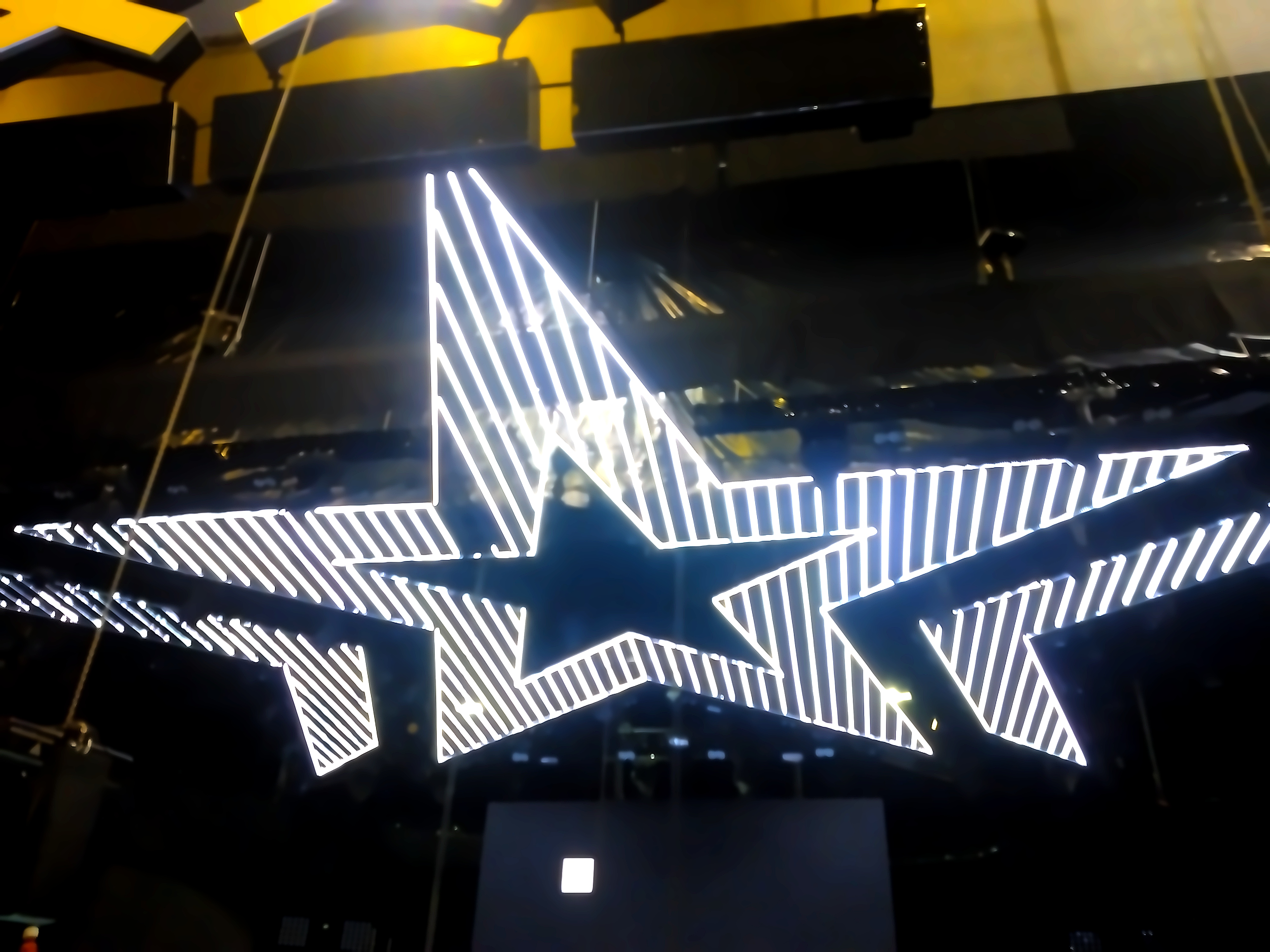
The ceiling featured a large star shape, over 8 meters high. This star was split into irregular segments, which made LED pixel mapping much harder than a standard grid layout. In a normal installation, you draw simple rectangles and you are done. Here, every segment of the star had its own unique shape and had to be mapped individually.
Why No Aluminum Profiles? #
Normally, a professional LED pixel installation would use aluminum LED profiles to protect and diffuse the strips. In this case, over 1 kilometer of strips would have needed to be cut and placed into profiles — a task that was simply not realistic within the project budget and timeline.
The solution was practical:
- Floor strips got protective cover glass panels placed on top — enough to handle foot traffic and stage equipment.
- Ceiling strips on the star were left exposed. Since the star was more than 8 meters above the stage, the lack of diffuser profiles was completely invisible both to the live audience and on camera.
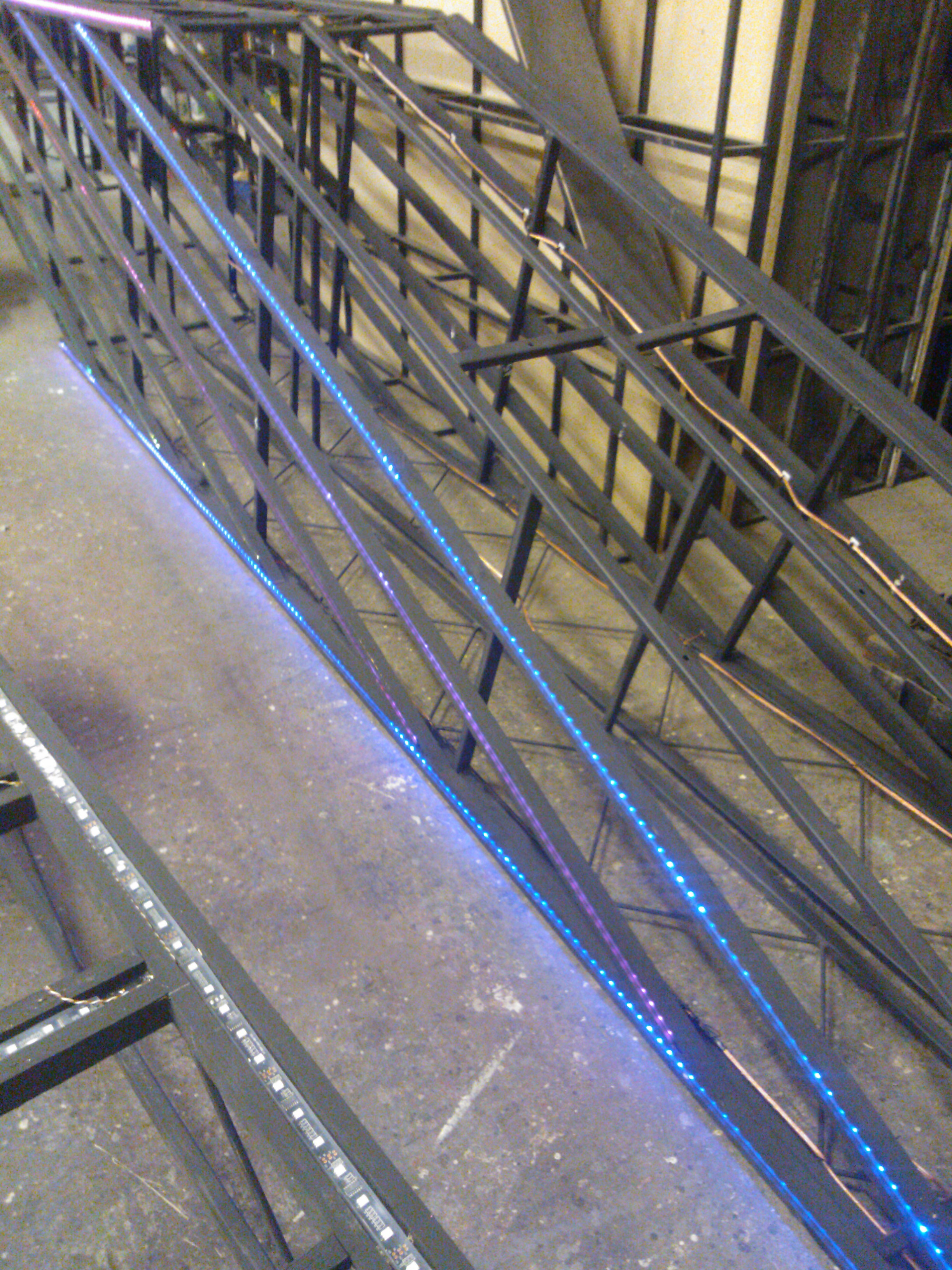
This kind of smart compromise is common in professional LED installation service work — knowing where quality is visible and where it simply does not matter.
SK6812 5V Pixel Strips and Power Injection #
The entire installation used SK6812 LED strips running at 5V. This is a popular and reliable digital RGB LED strip chip, similar to WS2812B but with better color consistency.
The downside of 5V systems is voltage drop. Over longer runs, the voltage at the far end of the strip drops too low, causing color shifts and dimming. The solution is power injection — connecting the power supply at multiple points along the strip rather than just at one end.
This installation required a significant number of power injection points spread across the floor and ceiling. It added complexity to the wiring, but it was necessary to maintain even brightness and accurate color across the whole surface.
It is worth noting that the client already owned older 5V strips, and WS2815 — a 12V backup-data strip that would have been easier to work with for long runs — was not available at the time. So the team worked with what was there and managed it well with careful power planning.
LED Strip Studio Controllers and Software #
Several LED Strip Studio controllers were used to drive the installation. This hardware and software combination is built specifically for complex pixel LED installations where standard DMX or Art-Net setups would be too slow or too complicated.
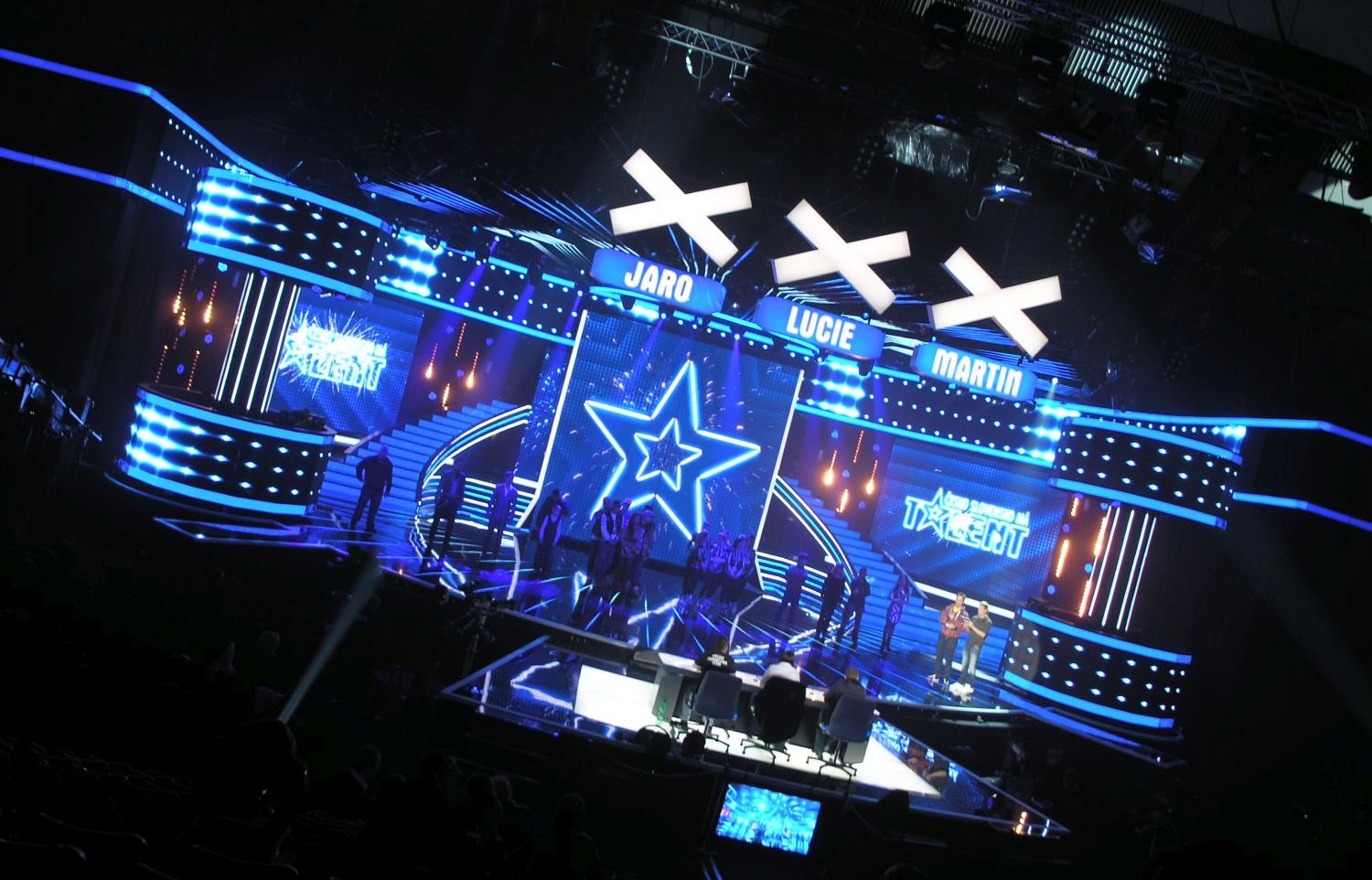
One of the key parts of the signal chain was a PCI-Express HDMI grabber — the Intensity PRO. The show’s operator sent an HDMI signal from the broadcast desk directly into this capture card. The LED Strip Studio software then grabbed that live video feed and mapped it in real time onto both the ceiling star and the floor surface. What the director was sending on screen was what appeared under the performers’ feet and above their heads — simultaneously.
Why LED Strip Studio Protocol Instead of Art-Net? #
For large pixel LED installations, the choice of data protocol matters a lot. Art-Net is the industry standard and works well in many situations. But for this project, the team chose to use the native LED Strip Studio protocol instead.
The reason is speed and efficiency. LED Strip Studio’s own protocol transmits compressed data and is faster than Art-Net. This meant the image on the floor and ceiling updated more smoothly, with less latency — important when you are displaying a live video feed that needs to feel real-time.
DMX was still used in the installation, but only for specific tasks — mainly for remote control of stage props and LED costumes worn by performers. For pixel data at this scale, DMX simply does not have enough bandwidth. It is a lighting control protocol, not a video transport.
Mapping the Star in About One Hour #
One of the most impressive parts of this project was how quickly the pixel mapping was completed. Mapping a star shape divided into irregular segments — each with its own strip runs going in different directions — could take many hours using traditional tools like Art-Net pixel mapping in grandMA or similar consoles.
The team used LED pixel mapping software in LED Strip Studio, which shows a live preview of the mapping as you draw each segment. You can immediately see how the image falls on the physical shape, correct errors on the spot, and move on. The entire mapping process for the star ceiling was completed in approximately one hour.
This is a practical example of why specialized LED mapping software built for pixel installations saves enormous amounts of time compared to adapting general lighting consoles to do a job they were not designed for.
Pixel Effect for Performer Acts #
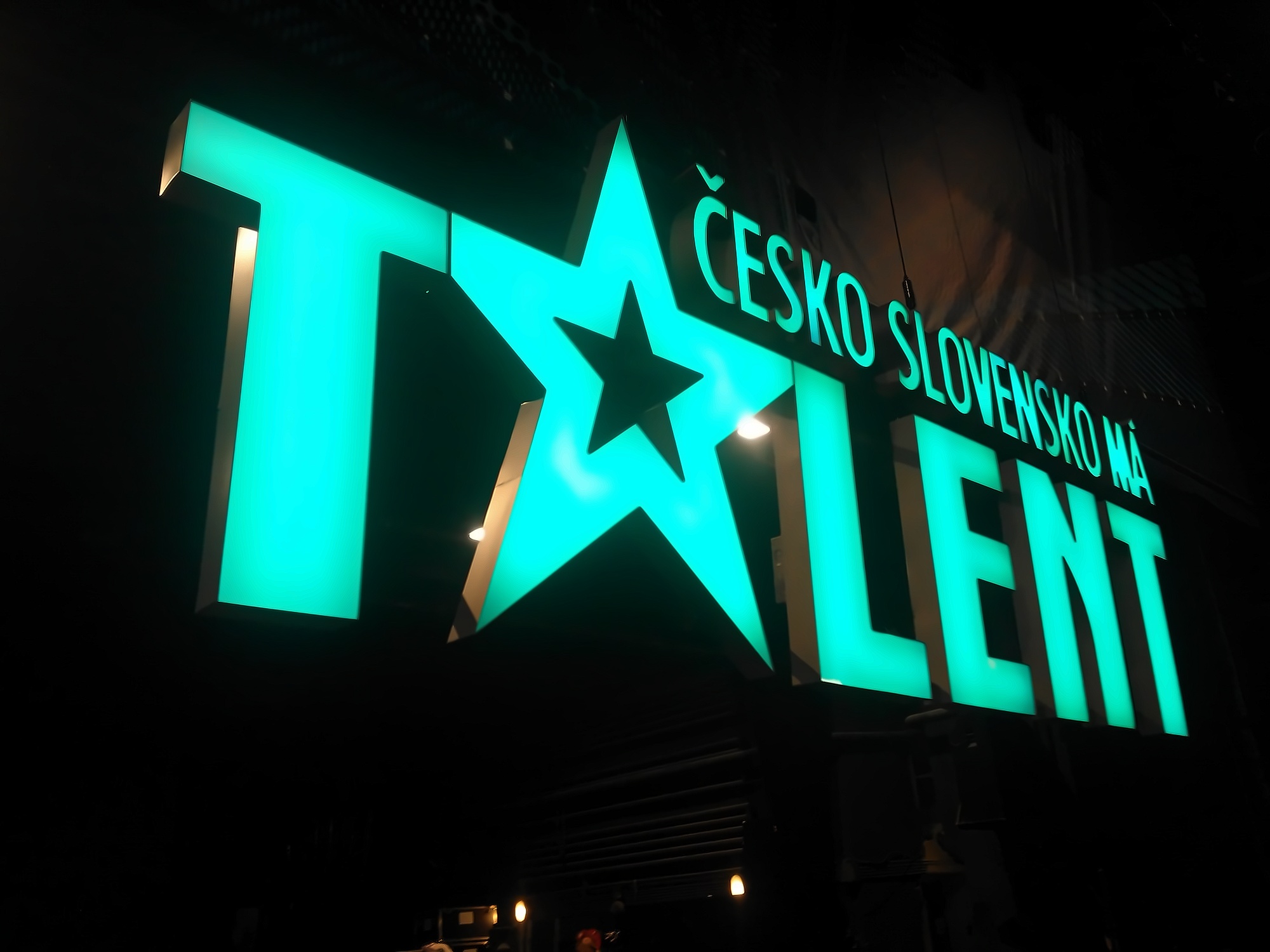
Beyond the floor and ceiling, the production also used several pixel LED effects throughout different acts. E.g. this is the logo of the show light up with LED strips:
What This Installation Proves #
This concert stage LED lighting project shows what is possible when you combine the right hardware, the right software, and practical problem-solving on a real-world budget:
- Irregular shapes can become full LED pixel walls and screens
- Live HDMI video can be mapped to any surface in real time
- Smart compromises on diffusers and profiles can save budget without hurting the final result
- Specialized LED Strip Studio software can dramatically cut down complex mapping time
The result was a stage where performers literally stood on a live video screen, under a glowing 8-meter star — and the audience at home never knew how it was made.
Frequently Asked Questions #
How do you display live video on a pixel LED floor or ceiling?
You need an HDMI capture card (like the Intensity PRO PCI-Express grabber used here) connected to a computer running pixel mapping software such as LED Strip Studio. The software captures the live HDMI signal and maps it in real time to the pixel coordinates of your LED installation. Each pixel on the floor or ceiling then displays the corresponding part of the video frame.
Why use LED Strip Studio protocol instead of Art-Net for large pixel installations?
Art-Net is a standard protocol but has bandwidth limitations and adds latency when transmitting large amounts of pixel data. LED Strip Studio’s native protocol transmits compressed data faster, which results in smoother, lower-latency playback — especially important when displaying live video across hundreds of meters of SK6812 or WS2812B LED strips.
Why is power injection necessary with 5V LED strips?
5V addressable LED strips like SK6812 experience voltage drop over distance. As the voltage falls below the operating threshold, LEDs at the far end of the strip become dimmer and show incorrect colors. Power injection — connecting the power supply at multiple points along the strip — keeps the voltage stable throughout and ensures even brightness and accurate color reproduction across the whole installation.
How long does pixel mapping take for an irregular shape like a star?
With traditional tools like grandMA or basic Art-Net pixel mapping, mapping an irregular star split into non-uniform segments could take many hours. Using LED Strip Studio software, which shows a live preview of the mapping as you draw each segment, the entire star ceiling in this installation was mapped in approximately one hour.
Do LED strips on a stage ceiling need aluminum profiles and diffusers?
Not always. In this installation, the star ceiling was over 8 meters above the stage. At that height, the lack of aluminum profiles and diffusers was invisible both to the live audience and on camera. Diffusers matter most when viewers are close to the strips. For high-mounted elements, skipping profiles is a reasonable budget decision that does not affect the visual result.
What is the difference between DMX and pixel LED protocols like Art-Net or LED Strip Studio protocol?
DMX is a lighting control protocol designed for dimmers and simple fixtures. It has limited bandwidth — a single DMX universe handles only 512 channels, which translates to about 170 RGB pixels. For large pixel installations with thousands of LEDs, you need protocols like Art-Net (which runs DMX over Ethernet across multiple universes) or proprietary compressed protocols like LED Strip Studio’s own format. In this project, DMX was used only for stage props and LED costumes, while LED Strip Studio protocol handled all the pixel video data.